Medical German
German for doctors has to work inside conversations.
Specialist language exam, licence recognition, history taking, patient presentations and team communication are more than vocabulary. Practice German phrases that work precisely and respectfully in clinics.
Language training for communication. No medical, legal or authority advice.

Short answer
What is medical German?
Medical German is workplace German for doctors: history taking, patient communication, documentation, patient presentations and team clarification. Recognition, licence or temporary permit paths can also require general German and specialist medical language depending on the federal state.
Official orientation
Recognition and specialist language depend on the process.
Requirements differ by federal state, authority and exam path. These sources orient learners around regulated medical work, recognition and medical language exams.
- Anerkennung in Deutschland: Doctor Offizielles Portal der Bundesregierung: Ärztliche Tätigkeit ist in Deutschland reguliert.
- Anerkennung in Deutschland: recognition procedure example Beispielverfahren mit Approbation, Berufserlaubnis und sprachlichen Anforderungen.
- Bundesärztekammer: Work and Training in Germany Offizielle Orientierung der Bundesärztekammer zu ärztlicher Tätigkeit und Weiterbildung in Deutschland.
- telc Deutsch B2·C1 Medizin Offizielle telc-Prüfung für berufliche Kommunikation im medizinischen Kontext B2/C1.
Search intent with practice
Four language moments that matter immediately in clinical work.
History taking
Order symptoms in time, clarify complaints respectfully and summarize patient answers neutrally.
Patient presentation
Turn a conversation into a structured, concise presentation for a senior doctor, team or exam.
Medical written register
Everyday speech becomes professional language: precise, neutral and traceable.
Clarification
Name uncertainty clearly, confirm instructions and avoid guessing critical information.
Exam logic
Specialist language lives in conversation, notes and presentation.
1
History-taking conversation
Understand the patient, ask targeted follow-ups and clarify time course and complaints
Open question, focused follow-up, summary and confirmation.2
Documentation
Transform spoken language into a factual medical note
Use neutral wording, avoid colloquial phrasing and keep relevant details.3
Patient presentation
Present a case briefly, logically and with safe professional German
Person, chief complaint, time course, relevant findings and next point to clarify.4
Team clarification
Ask professionally when something is unclear instead of assuming silently
Name the point, ask for confirmation and use safety-oriented language.
Mini tool
Patient presentation is the ideal public exercise.
It connects history taking, structure, professional German and team communication. This is where language becomes usable rather than merely known.
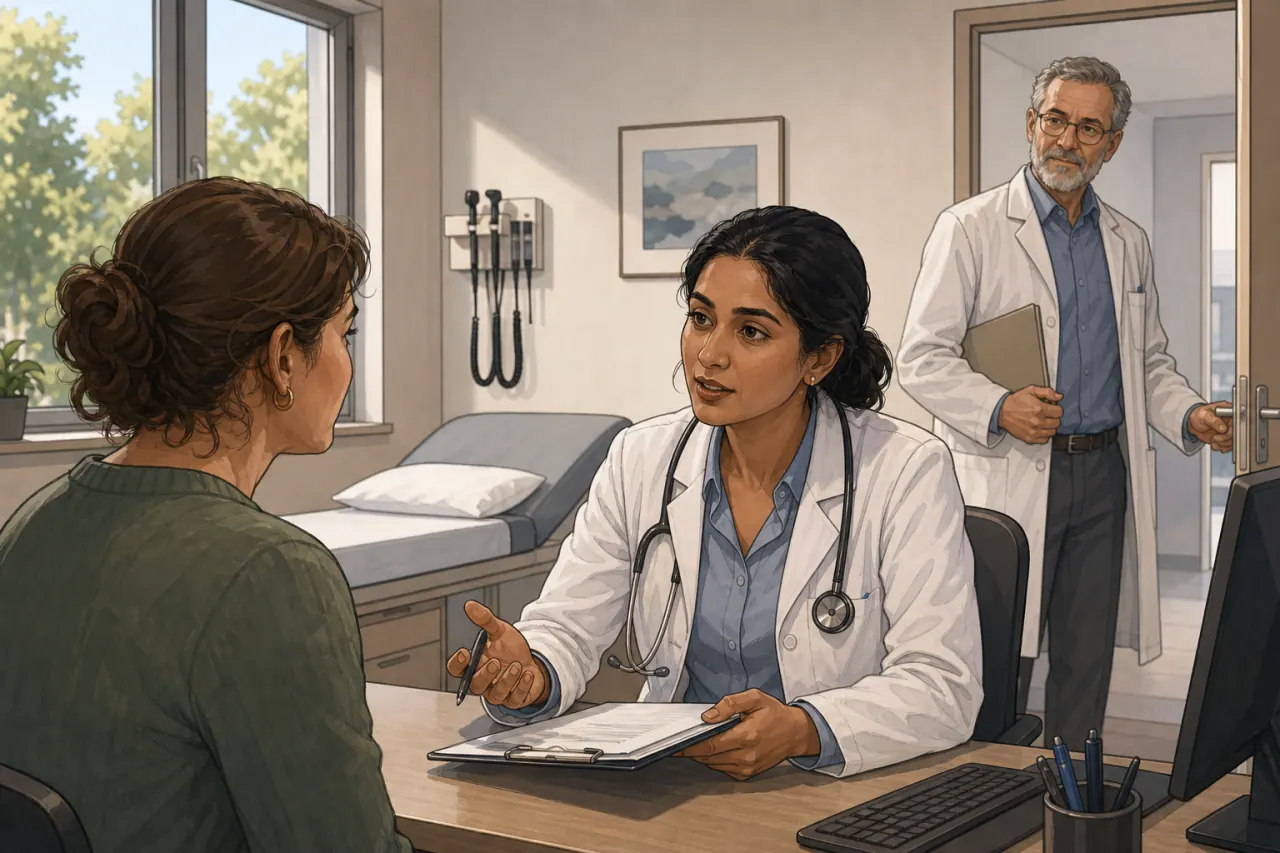
Phrases for clinical German
Short phrases that create safety.
- Ich fasse kurz zusammen, ob ich Sie richtig verstanden habe.
- Seit wann bestehen die Beschwerden, und haben sie sich verändert?
- Die Patientin stellt sich mit seit gestern zunehmenden Schmerzen vor.
- Könnten Sie bitte bestätigen, ob ich den nächsten Schritt korrekt verstanden habe?
FAQ
Frequently asked questions about medical German
What German do doctors need in Germany?
For a licence or temporary permit, recognition procedures can require general German and specialist medical language depending on the federal state. In practice, B2/C1 medical German means history taking, documentation, patient presentation and safe clarification.
What is medical German?
Medical German is workplace German for doctors: patient conversation, history taking, informed communication, team communication, medical notes and case presentations. BesserStudy trains language, not medical decisions.
Can I prepare for the medical language exam online?
Online practice is useful for language structure: conversation phases, follow-up questions, summaries and patient presentations. Official exam details come from medical chambers, authorities or exam providers.
Practice now